Agents are only as good as the systems they can reach
Secure connections to CRM, ERP, accounting, messaging, and cloud systems — so automation acts on live data instead of exports.
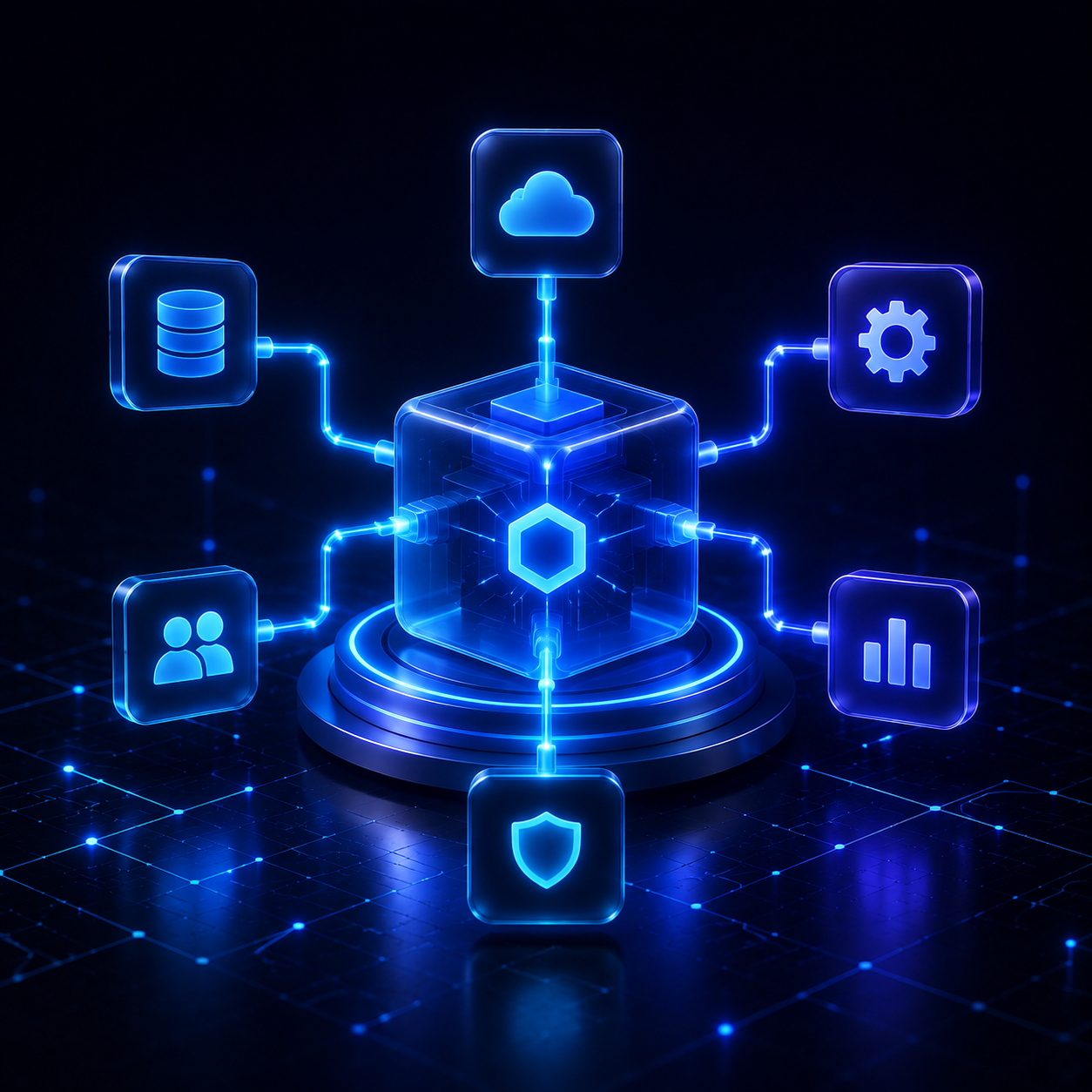
What System Integration does
Integration is where most AI projects quietly stall. We treat it as core engineering: mapped fields, handled failures, monitored pipelines, and a rollback path for every write.
No more manual exports between systems
Failures alerted, not discovered later
Every write traceable to its trigger
What it handles day to day
Two-way sync
Read and write against your systems with conflict rules defined up front.
Field mapping
Your data model documented and mapped, not guessed at during build.
Failure handling
Retries, dead-letter queues, and alerts so nothing disappears silently.
Monitoring
Pipeline health and throughput visible, with alerts before users notice.
From input to completed work
Audit
Systems, APIs, and data ownership are mapped.
Connect
Secure credentials and endpoints are established.
Sync
Data flows with validation and conflict rules.
Monitor
Health, errors, and volume are tracked continuously.
Common deployments
Works with your stack
Not on the list? Most systems with an API, database, or file exchange can be connected.
See System IntegrationQuestions
Frequently asked questions
Straight answers on scope, data, timelines, and control for teams in Malaysia and Southeast Asia.
See how System Integration would work in your business
We start with your business goal, then decide what should be automated.
